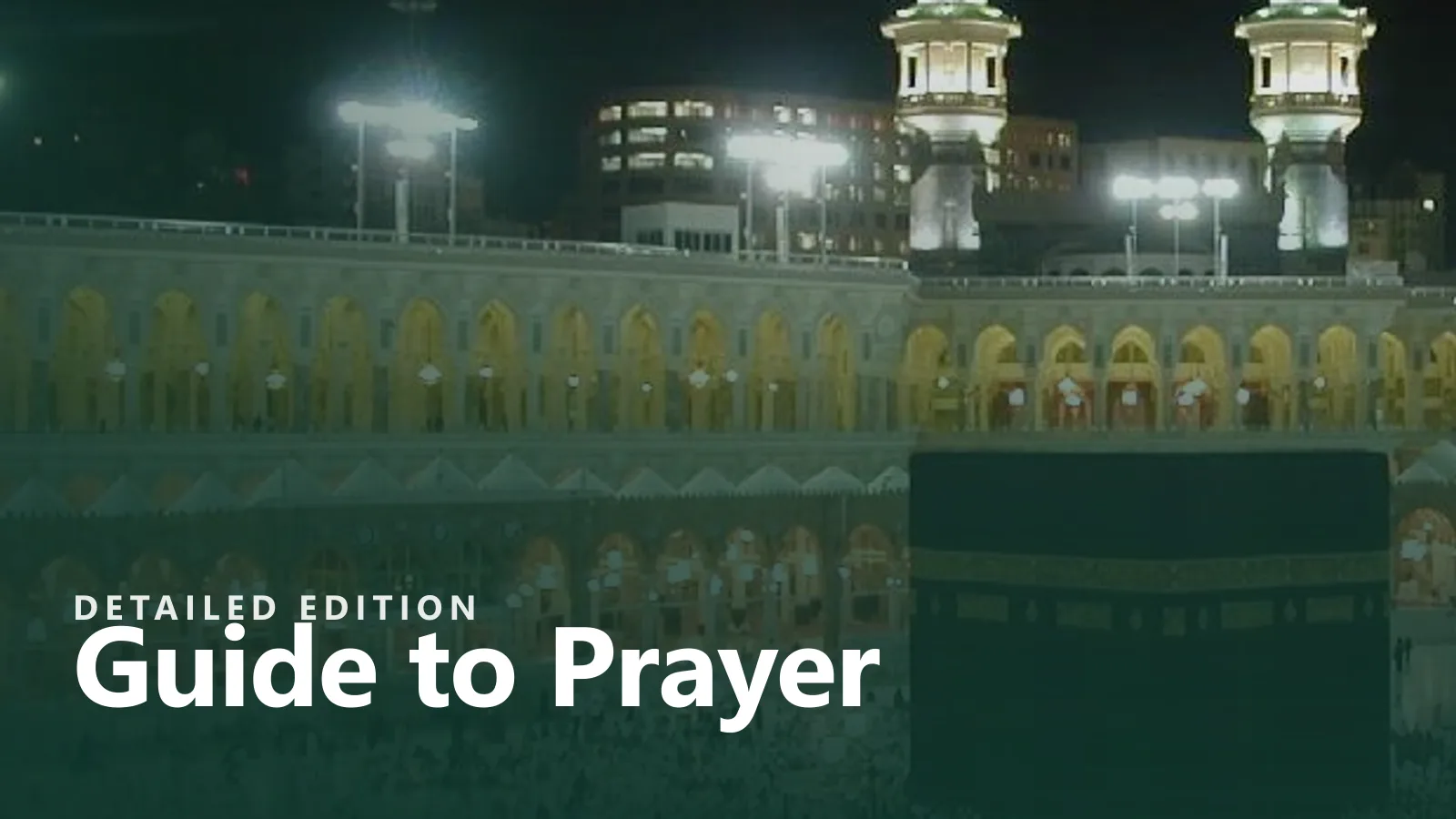
Guide to Prayer: Detailed
Prayer, from the first wudu, one step at a time
5 chapters, about 132 slides each. Nothing inside a course is timed — a chapter paused in November picks up where it stopped.
Sign in or create an account in a minute; the course opens in our learning portal.
What you get
658 lesson-plan slides across 5 chapters, with the teaching script on the slides themselves. No files to download. Everything runs in the browser.
How to use it
Choose a lesson that meets your need, work through it at your own pace, and return when needed. Check the course description for its intended audience and guidance. Explore the value of self-paced learning.
A guide to the prayer for learners who are new to it: a new Muslim, a child learning to pray, an adult who never learned properly. Nothing is assumed. Every Arabic term is explained the first time it appears, every step has its own slide with what to do and what to say, the postures are drawn, and everything that is said in prayer is given in Arabic, in transliteration and in plain meaning.
Five chapters (purification and preparation, the call to prayer, the daily prayer, the different forms of prayer, dhikr and khushu') in short lessons, each complete in itself, each with a reading for the learner and one for the teacher.
Take what you need. This course is self-paced. Each lesson covers one topic, so if a lesson is not relevant to you right now, skip it: there is no need to do every lesson, or to do them in order. For example, if you are not travelling, skip the lesson on praying while travelling, and come back to it whenever you need it.
Where the schools of law differ, the course says so and does not rule: follow what you were taught, and ask your local scholar.
Recitation. Every recitation is by Aaqib Azeez, from Wikimedia Commons: the adhan, Al-Ikhlas, Qur'an 41:37 (from his Mujawwad recitation of Fussilat) and Qur'an 64:16 under CC BY-SA 4.0 (each clip is trimmed and re-encoded, and shared under the same licence), and Al-Fatihah, Al-Kawthar and every other Qur'an verse that plays on a slide in the public domain (CC0). Each verse is cut from his recording and kept with the course; nothing is streamed from another site. Photographs are credited in the course's references.
In review. No scholar has checked this course yet; every reading says so.
Inside RISE Learn
The course opens in our browser-based learning app. These views show a Grade 6 Mathematics example; this course’s own lessons are listed on this page.
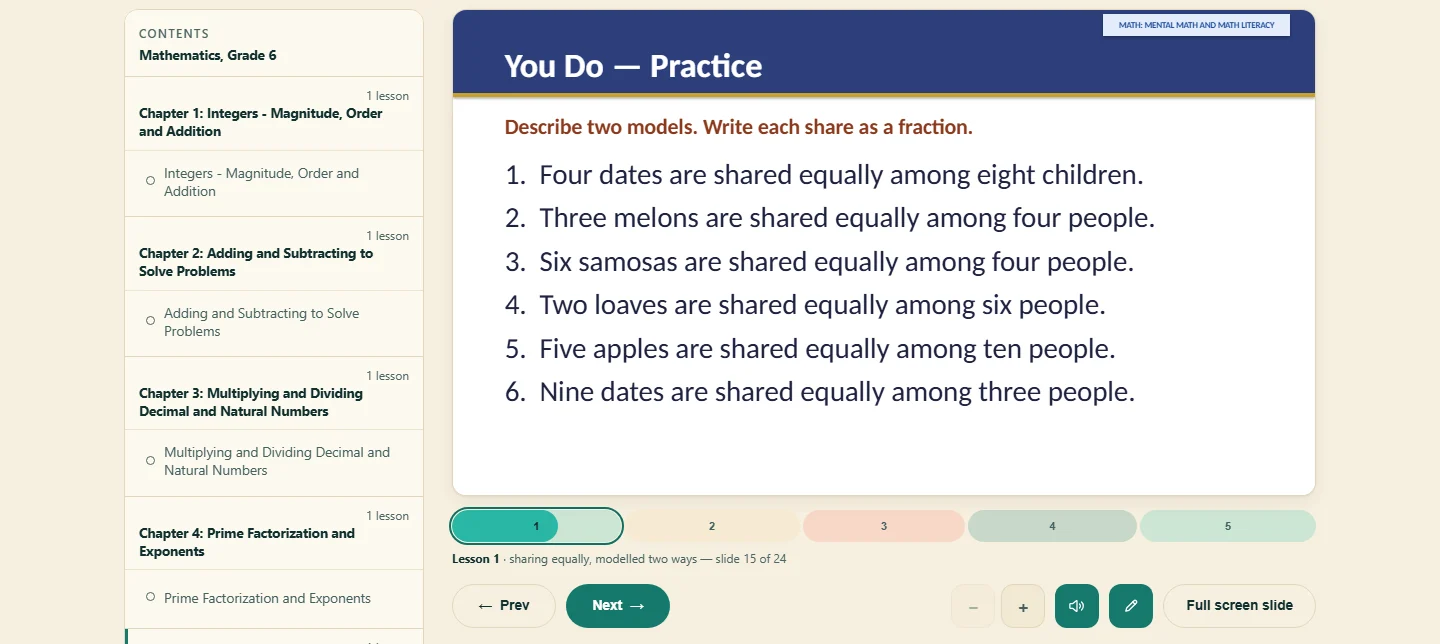
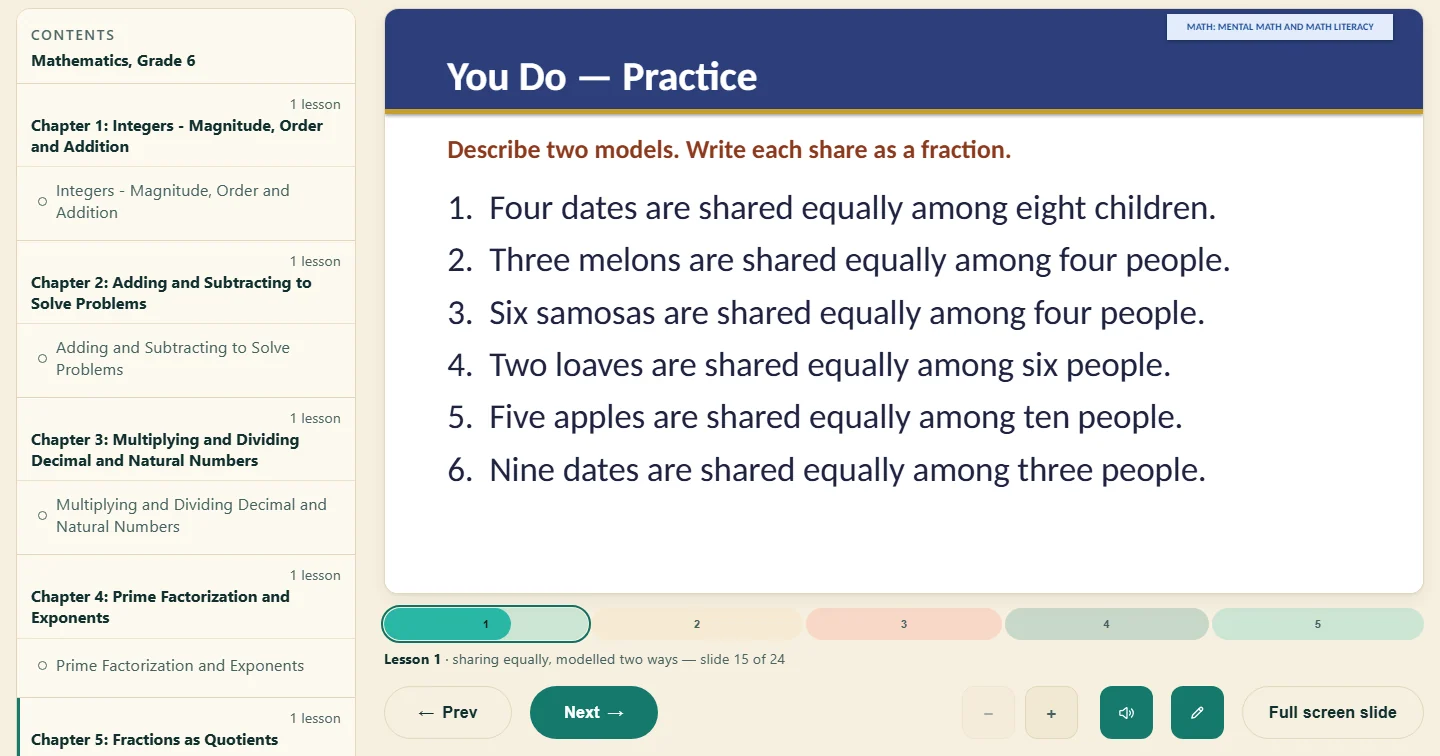
A preview
A real slide from Chapter 1: Purification and Preparation. The full deck opens when you enrol. Every slide is watermarked to the account viewing it.
What is inside
Chapter 1: Purification and Preparation
- Lesson 1Why We Purify Ourselves Before Prayer
- Lesson 2Intention and Getting Ready
- Lesson 3Starting Wudu: The Command and the First Steps
- Lesson 4Washing the Face, Arms, Head and Feet
- Lesson 5What Breaks Wudu and How to Keep It
- Lesson 6Ghusl and Tayammum: The Other Forms of Ablution
Chapter 2: The Call to Prayer
- Lesson 1What Is the Call to Prayer?
- Lesson 2The Words of the Adhan
- Lesson 3The Iqamah: The Call to Stand
- Lesson 4Answering the Call
- Lesson 5The Du'a After the Call
Chapter 3: Daily Prayer
- Lesson 1The Five Prayers and Words to Know
- Lesson 2The Five Prayers: Times, Rak'ahs and Sunnah
- Lesson 3Before You Begin: The Conditions of Prayer
- Lesson 4Inside the Prayer: The Pillars
- Lesson 5Standing, Takbir and Al-Fatihah
- Lesson 6Bowing, Prostrating and Sitting
- Lesson 7The Tashahhud, Blessings and the Taslim
Chapter 4: The Different Forms of Prayer
- Lesson 1Praying With Others
- Lesson 2Friday: The Jumu'ah Prayer and Its Khutbah
- Lesson 3Shaf', Witr and Qunut
- Lesson 4The Special Prostrations
- Lesson 5Eid, the Funeral Prayer and Greeting the Mosque
- Lesson 6The Eclipse Prayer and Istikharah
- Lesson 7When Prayer Is Difficult
- Lesson 8Praying When You Travel
Chapter 5: Dhikr and Khushu'
- Lesson 1First Words After the Salam
- Lesson 2Counting Your Dhikr
- Lesson 3Ayat al-Kursi and Du'a
- Lesson 4What Is Khushu'?
- Lesson 5Habits That Build Khushu'
- Lesson 6The Why of Prayer
Before you enrol
How do I get access?
Courses are licensed to schools and home-school programs — by grade, by subject, or the whole catalogue. Teachers and students enrol through their institution’s licence, and anyone can read a course page and its sample slides without one. If your school or home-school program is not on RISE yet, request a proposal. No card is collected anywhere. Inside a course nothing is timed: enrolment keeps one progress pointer on your account, so a course paused in November picks up exactly where it stopped.
Is there a record of completion?
Your account keeps a per-chapter record of what you have completed, which you can see any time in the portal. These courses are self-directed study; they do not carry accreditation, credit, or institutional approval.
Can I show the slides to my class?
Yes — projecting the decks to your own class from your own account is exactly what they are for. Every slide is watermarked to the account viewing it, so share your screen, not exported copies.
Will it work on a school network?
The portal is an ordinary website over standard HTTPS — no downloads, no plugins, no video CDN. If your school filter blocks it, ask IT to allow resourcesforislamicschools.com; the preview on this page is a quick way to test.
Ready to teach from it?
Opened through your institution’s licence. Nothing inside a course is timed.