For schools, academies and home-school programs

A complete curriculum,
ready to teach on Monday.

Presenter-ready slide decks for Wellness, Mathematics, Science, Social Studies and Reading and Writing with Purpose — a standard academic curriculum, written for Islamic educators and taught through the lens of Islam from the first slide of every chapter.

Presenting this? Press P, or use the Present button. Touch the lattice.

The problem

Good curriculum exists. Curriculum ready to teach in an Islamic classroom does not.

Teachers build their own decks on a Sunday evening, or teach from a textbook written for somebody else's classroom and patch the values back in as they go. Both cost hours nobody has.

RISE is the deck already built. A teacher opens a chapter and presents it — the teaching script is on the slides, the practice is on the slides, and so is the reflection at the end.

Before you decide

This is what Monday looks like.

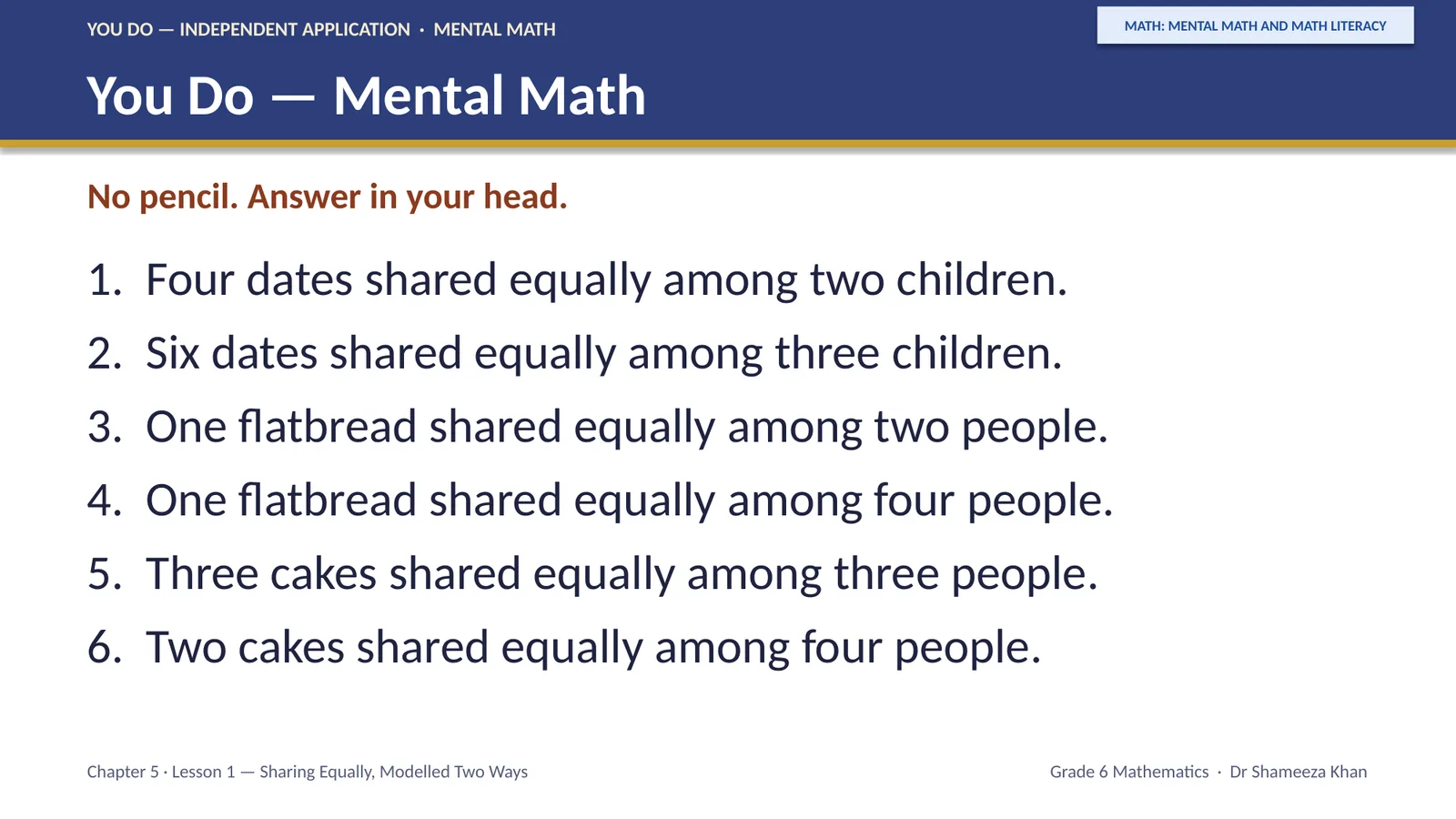
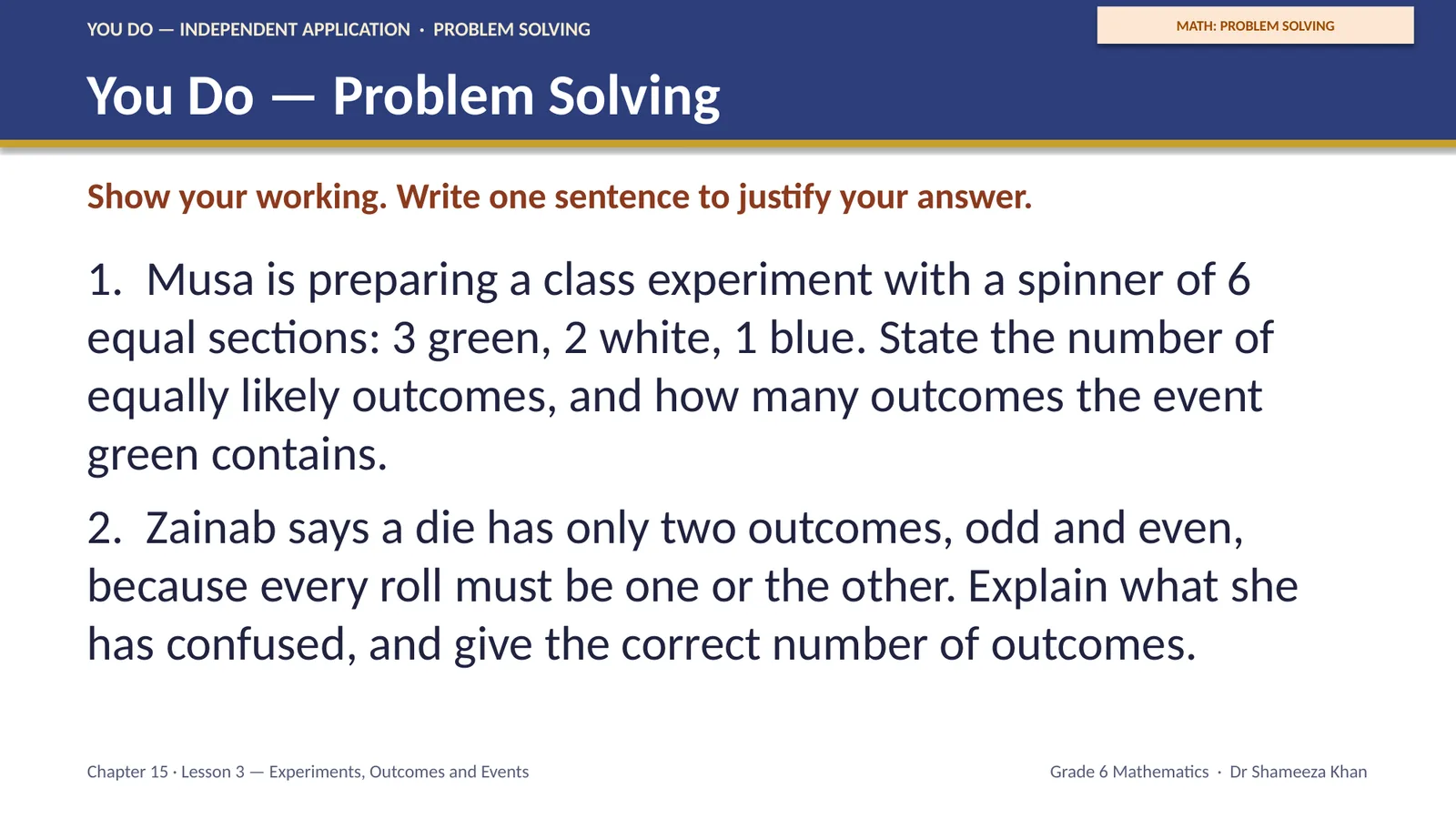
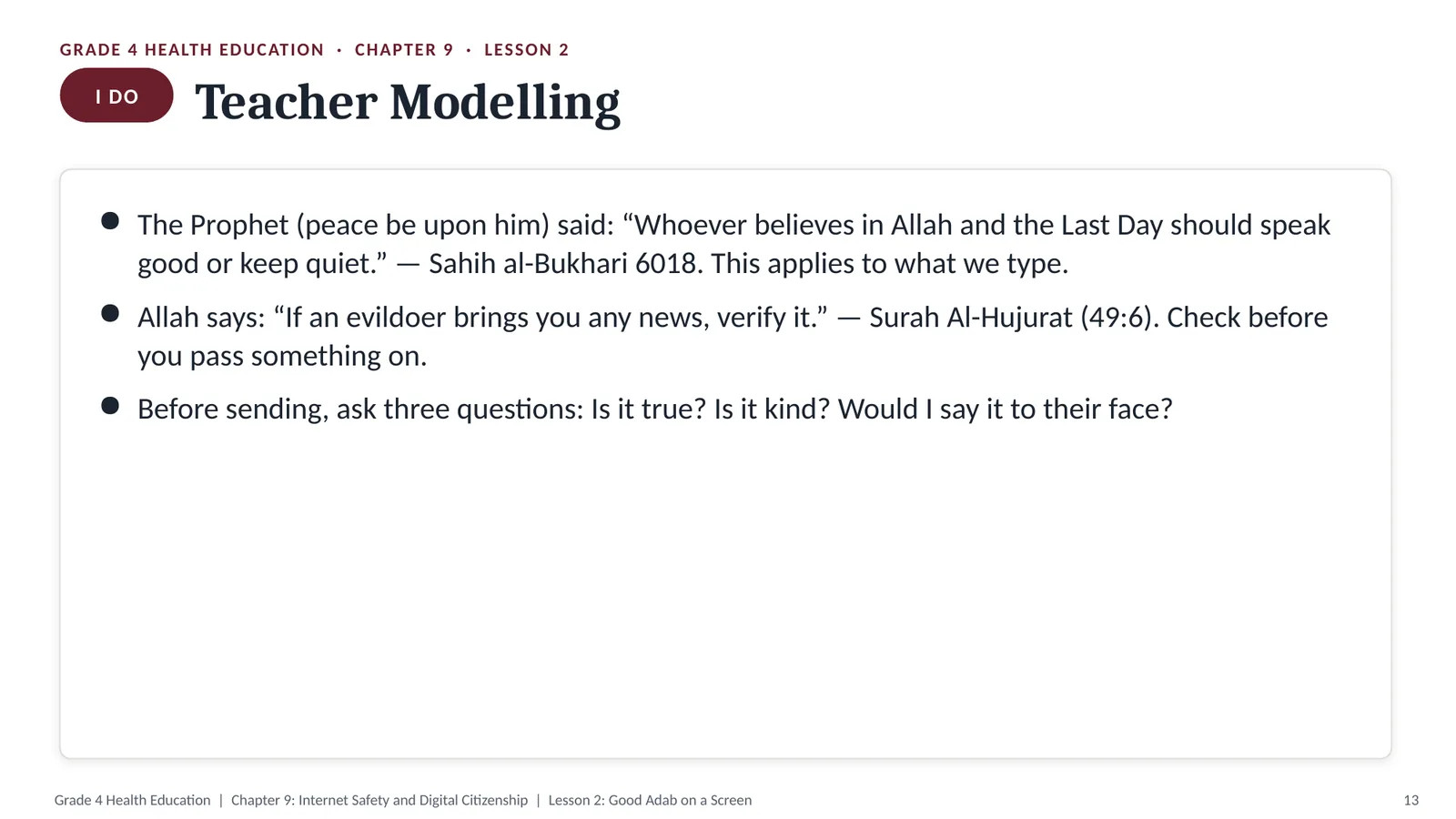
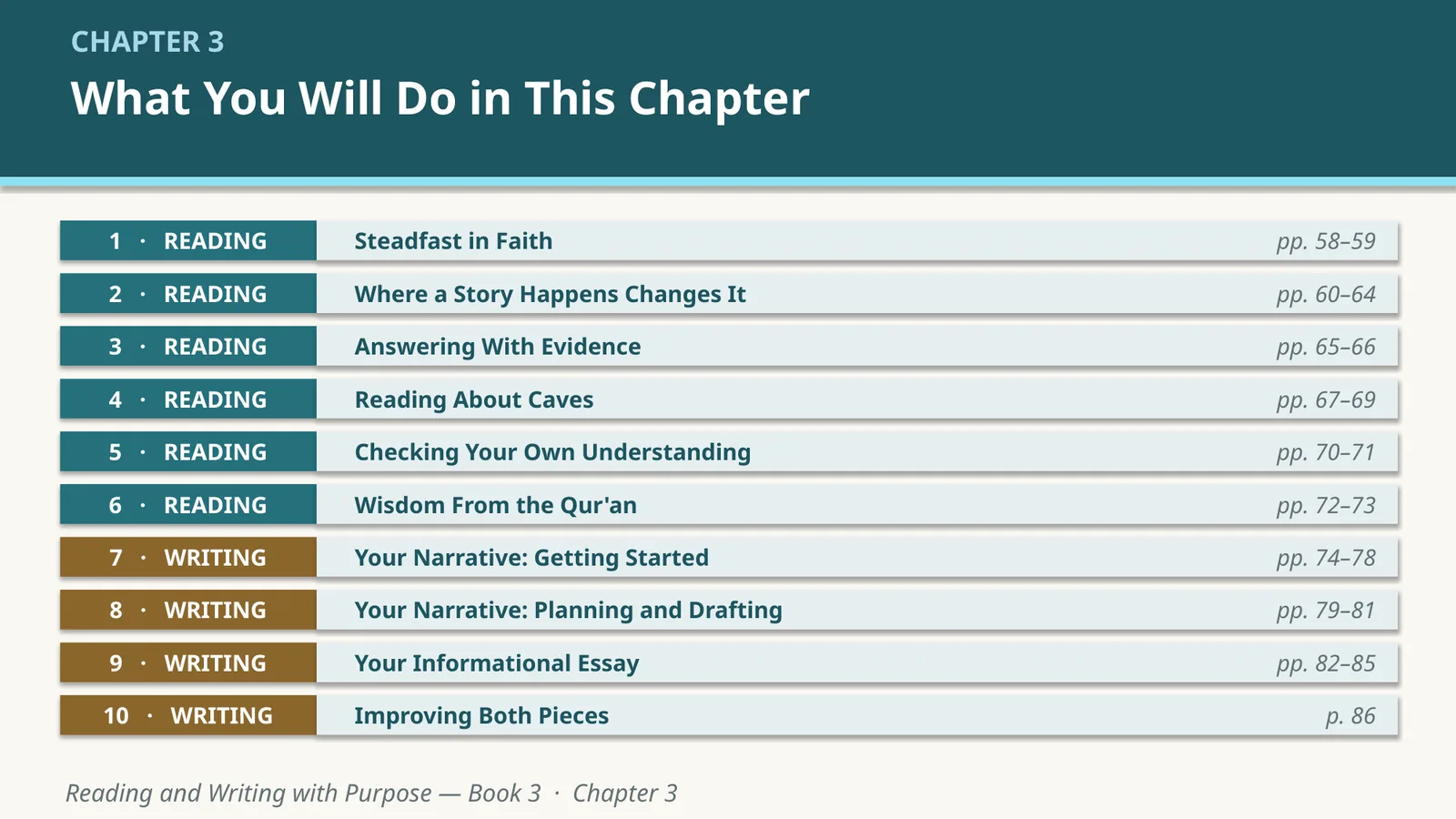
Four slides from four published decks — a problem set, an independent task, a real-world application, and a month of reading. Exactly as a class sees them.

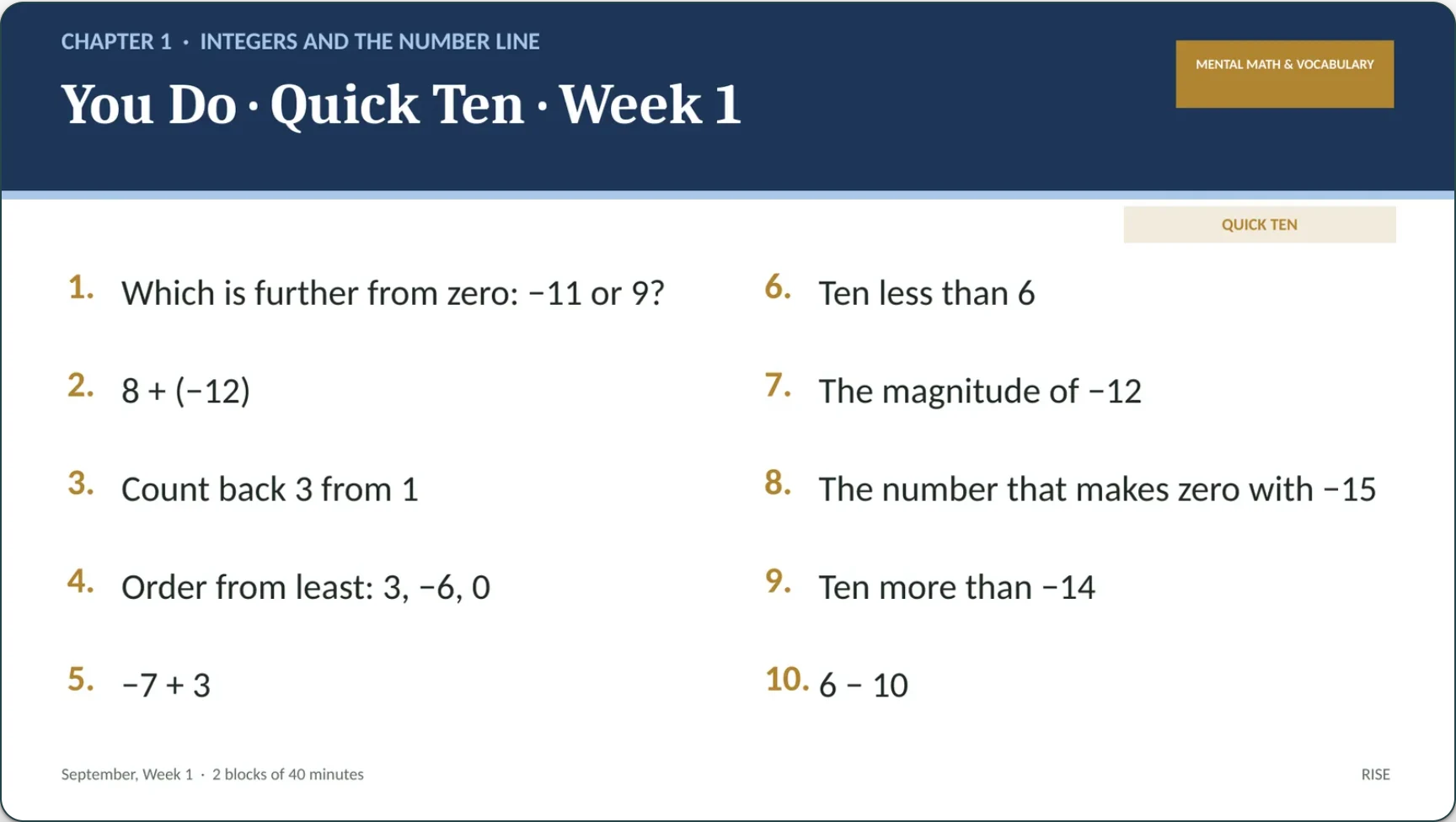
Problem set from Mathematics, Grade 6. Ten mental-maths questions over two slides — no pencil, answered in the head — with the teacher’s answers on the two after.
Problem setMathematics, Grade 61 / 4

Ten mental-maths questions over two slides — no pencil, answered in the head — with the teacher’s answers on the two after.

Inside the portal

Not a folder of files. A place to teach from.

  • Every teacher, their own account. Their own progress, the whole library, from the first sign-in.
  • Every panel does a job. The chapter rail, the week strip, the stage, the I Do · We Do · You Do row — one screen, no folders.
  • Any device. Present full-screen from a board; pick up mid-deck on a phone. The rail becomes a Contents tap.

What a teacher opens

Built around the person at the front of the room.

Every teacher, their own account

Their own progress, the whole library, on the classroom panel from the first sign-in. It opens on an ayah, a hadith or a duʿāʼ — a different one every teaching day of the year — then straight back into whatever they were reading.

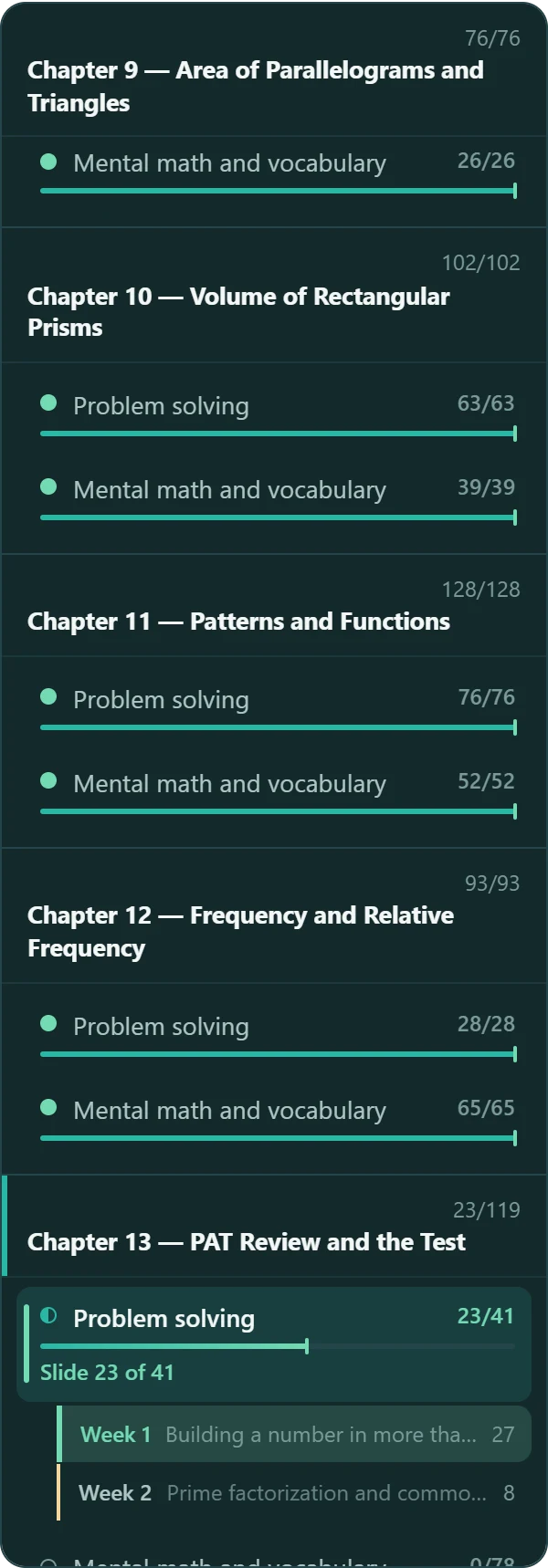
The chapter rail: every chapter and lesson with its progress bar and the resume point.
The chapter rail. Where every class is, to the slide.

19,955

slides, every one written for an Islamic classroom

14

cumulative exam papers, marked in the database so the answer key never reaches a browser

190

daily readings — none repeated in a school year

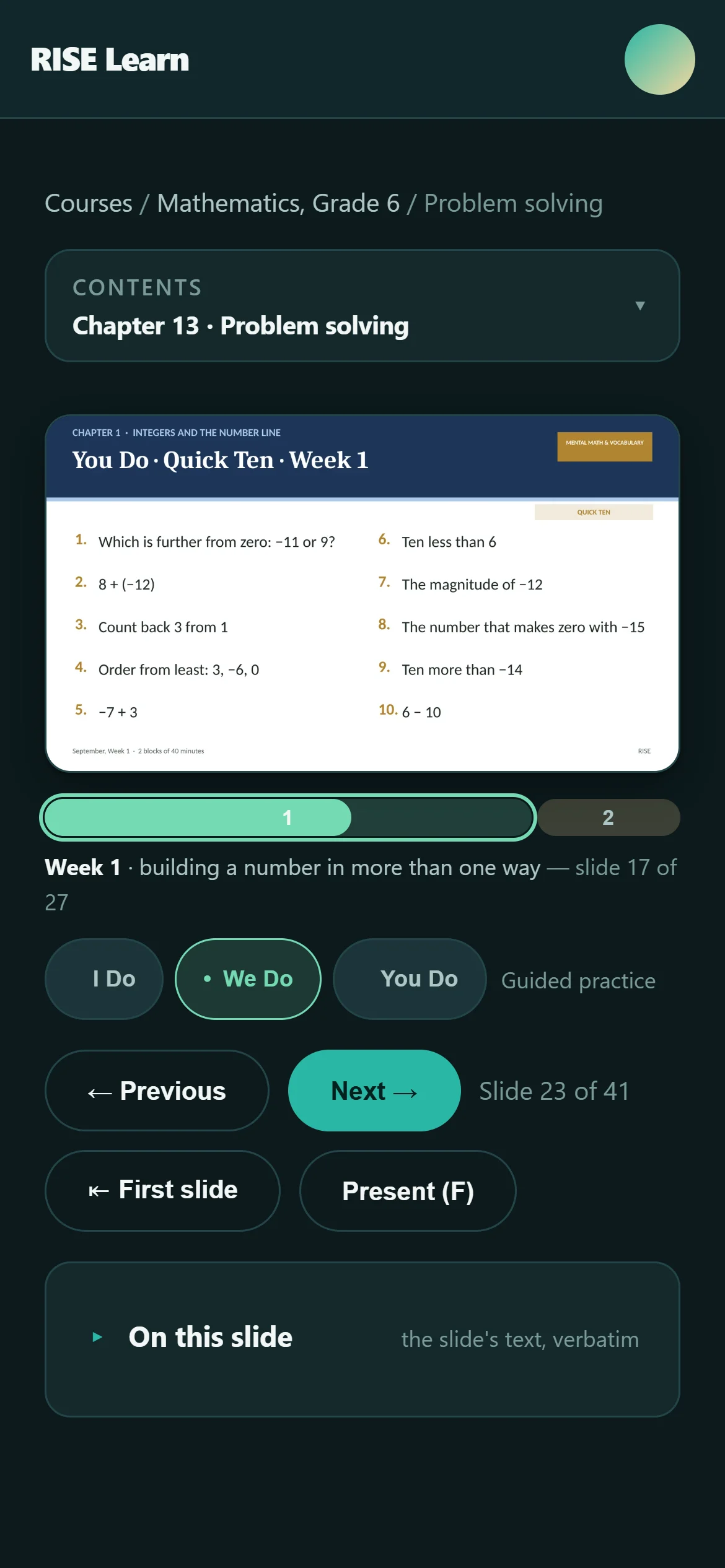
The I Do, We Do, You Do row under every slide, with the current stage lit.
The method, on every slide. Read on.

The method, on every slide

I Do. We Do. You Do.

Responsibility moves from the teacher, to the class together, to the child. Skipping a stage is the commonest way a good lesson goes wrong — children sent to practise something they have only watched will practise it wrongly, and then that is what they have learned.

  1. I Do

    The teacher shows how

    You work the example in front of the class and say the thinking out loud — including the false starts and the repairs. They are watching, not answering yet.

  2. We Do

    The class works with the teacher

    The same work again, with the class supplying the steps and agreeing what counts as a good answer. This is where misunderstandings surface, while they are still cheap to fix.

  3. You Do

    Students apply the learning

    Independent practice, with its requirement stated on the slide. By now they have seen it done and done it with help, so what you get back is what they can genuinely do alone.

Who it is for

A whole school, a small program, or one teacher.

Schools and academies

Your head of department verifies your own teachers, and sees how far each class has actually got — without asking us for anything.

  • Your own head of department verifies staff
  • Progress, class by class, to the slide
  • Nothing to install: a browser on any board or phone
Request a proposal

Home-school programs

If you have a curriculum and people teaching it, you get what a school gets — the same verification, the same oversight.

Request a proposal

Individual educators

Teaching alone, or teaching your own children. You do not need a school behind you to read every course.

Make an account

Account classes

Your school decides who teaches. Not us.

  1. Head of Department

    Runs the school or program

    Principals, vice-principals, deans and heads of department. Verify your own teachers, invite new ones by email, and see how far each class has read.

    • Verifies teachers
    • Invites by email
    • Sees every class
  2. Verified Educator

    Vouched for by their school

    Reads every course, presents every deck, and is assigned the students they teach. This is the account that opens the answer keys and the marking guides — the sample full-mark answer and the band descriptors a student account is simply not served.

    It is also the account that marks. A chapter assessment arrives with its ten multiple-choice questions already scored; the teacher reads the two written answers, records a mark against the rubric and writes the comment that goes back with it. And it sets the pace: a teacher chooses how far ahead their class may read, and a chapter closed here is refused by the database — not hidden from a menu a curious student can type past.

    • Opens the answer keys
    • Marks written work
    • Sets how far ahead
    • Sees their own class
  3. Student

    Assigned to a teacher

    Works through the same material at their own pace. Their teacher sees how far they have read and the papers they hand in — and nothing else: not their practice answers, not their exam attempts, not their profile.

    • Reads at their own pace
    • Seen by one teacher
    • Nothing else shared

Getting started

Three steps. Nothing to install.

  1. 1

    Tell us who you are

    The form below. It takes a minute.

  2. 2

    We send a proposal

    Written for your school — the grades, the subjects, or the whole catalogue.

  3. 3

    Your staff sign in

    And are verified by your own head of department.

Licensed to your institution by grade, by subject, or the whole catalogue — your staff and students enrol in whatever it covers, and nothing inside a course is timed: a teacher who pauses in November picks up in January exactly where they left off.

Request a proposal

Bring RISE to your teachers.

Would rather just write? info@resourcesforislamicschools.com
Already have an account? Sign in to the portal

Request a proposalresourcesforislamicschools.com/invite
Look around the portallearn.resourcesforislamicschools.com
Play the gamesquranadventure.com